Host Roberta Hall speaks with Linda Drach about developing healthy food environments for incarcerated women at Coffee Creek Correctional Facility in Oregon. Linda Drach is one of the project staff. She works for the Oregon Health Authority. The project is funded by Kaiser Permanente, and is a partnership between the Corrections Division and a branch of the Oregon Health Authority.
Tens of thousands of protesters converged on the National Mall in Washington, DC on Sunday to demand action on climate change. Among their principal targets: the proposed Keystone XL pipeline, which would carry oil from the Alberta Tar Sands in Canada to U.S. ports on the Gulf of Mexico.
The project is an environmental disaster waiting to happen. Aquifers, delicate ecosystems, and entire communities would be devastated in the event of a major leak. Small wonder, then, that a Senate majority recently voted in favor of the project, and that the President is at best ambivalent.
Abe and Joe look at the latest battleground between profit and preservation.
Iven Hale hosts this President's Day episode. Please note that an unforseen glitch in the recording clipped the first 30 or so seconds from the beginning. Once it can be recovered it will be re-inserted. All that was lost was the intro-music and some of Iven's opening remarks. On the rest of the show, we hear:
Alan Wieder talks with Marcia Meyers, founder of Rethinking Psychiatry. They discuss the organization and it's mission to educate people about the diversity of ways to deal with emotional disturbances, as well as interrogate the money-making and exploitive motivations behind mainstream psychiatry. They also talk about the up-coming Rethinking Psychiatry Film Festival, which will feature Old Mole Jan Haaken's own documentary, "MindZone: therapists behind the front lines".
Bill Resnick talks with Ben Goldacre about the pharmaceutical industry's influence on science research. He points out that because clinical trials don't have to be published, there's a remarkable bias in favor of pharmeceutical manufacturers. He talks about the deleterious effects this has on doctor's and independent academic researcher's ability to evaluate approaches to treatment.
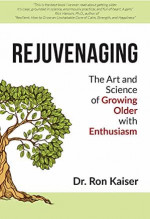
Would you prefer to age comfortably in your own home or retire to a senior care facility? If you chose the former, you might be interested to know that Portland is about to become a part of the village movement, which began 10 years ago in Boston when 12 older adults created Beacon Hill Village so that they could age at home and remain independent as long as possible. There are now over 80 villages nation-wide, and over 140 more in development.
Yolanda Whyte, MD, is a pediatrician from Atlanta, Georgia, who has given several speeches characterizing fluoride as a health risk to children, African-American and Hispanic communities, and people with diabetes and kidney disease.
Here is her lecture at Portland State University in February, 2013.